
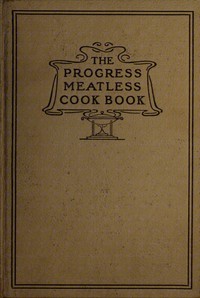
The progress meatless cook book : And valuable recipes and suggestions for…
Forget everything you know about modern plant-based cooking. 'The Progress Meatless Cook Book' isn't here to talk about carbon footprints or animal welfare. Published in 1909 by Carlotta Mixer Lake, this book is a snapshot of a very different culinary moment. It was written for the everyday American housewife who might need to stretch her budget, cater to a family member's 'dyspepsia' (a common term for indigestion back then), or simply try the latest health trend.
The Story
There's no plot, but there is a clear mission: to prove you can eat well without meat. Lake organizes the book with practical chapters on soups, entrees, and salads. The 'story' is in the recipes themselves. You'll find dishes with names like 'Protose Roast' (a canned meat substitute popular then) and 'Lentil Cutlets.' She uses lots of nuts, legumes, eggs, and dairy to create satisfying mains. The instructions are brief, assuming a lot of cooking knowledge, and the ingredient lists reflect what was available in a pre-supermarket world. It’s a direct, no-nonsense manual from a skilled home cook to her peers.
Why You Should Read It
I love this book because it completely humanizes historical eating. This isn't a dry textbook; it's someone's stained, well-used kitchen companion. Reading it, you get a sense of the constraints and creativity of home cooks over a century ago. The 'Mock Meats' section is especially fun—it shows a real desire for familiar textures and flavors, long before food science gave us today's alternatives. It’s also a humble reminder that 'plant-based' isn't a new, trendy concept but has practical roots in everyday life. The language is charmingly dated, and you can't help but smile at suggestions for a proper 'Meatless Thanksgiving' or the heavy reliance on cream and butter in what we'd now call 'vegan' recipes.
Final Verdict
This book isn't for someone looking for reliable, tested recipes for dinner tonight. It's a treasure for food history nerds, curious cooks, and anyone who loves vintage ephemera. If you enjoy poking through antique stores and wondering about the lives of the people who owned the items, this cookbook offers that same thrill. It’s a conversation starter and a fascinating, direct line to the tastes and kitchens of the early 1900s. Perfect for a lazy afternoon read with a cup of tea, letting your imagination fill in the smells and sounds of Carlotta Lake's kitchen.
This masterpiece is free from copyright limitations. It serves as a testament to our shared literary heritage.
Patricia Miller
7 months agoExceptional clarity on a very complex subject.
Sarah Hernandez
2 months agoThe digital formatting makes it very easy to navigate.
Susan Lopez
1 year agoExceptional clarity on a very complex subject.
Nancy Brown
6 months agoGiven the current trends in this field, the step-by-step breakdown of the methodology is extremely helpful for students. This is a solid reference for both beginners and experts.


Charles Hernandez
3 months agoI started reading this with a critical mind, the objective evaluation of the pros and cons is very refreshing. An excellent example of how quality digital books should be formatted.