
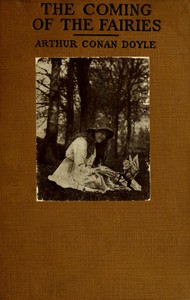
The Coming of the Fairies by Arthur Conan Doyle
Forget everything you think you know about Arthur Conan Doyle. This isn't a Sherlock Holmes adventure. Instead, 'The Coming of the Fairies' is his full-throated, earnest defense of the supernatural, centered on one of the 20th century's most famous hoaxes.
The Story
In 1917, two cousins, Elsie Wright and Frances Griffiths, took photographs in the woods behind their Cottingley, England home. The pictures showed the girls surrounded by what appeared to be delicate, winged fairies. The images caused an uproar. When Doyle, a devoted spiritualist, got wind of them, he saw not a childhood prank, but the scientific evidence he'd been searching for. This book is his report. He lays out the case: he includes the photos, interviews the girls and their families, and consults with photographic experts of the day. With the zeal of a prosecutor, he argues against every possible objection, convinced that these paper cut-outs and clever poses are, in fact, visitors from another realm. The narrative follows his investigation and his growing, unshakable belief.
Why You Should Read It
This book is captivating because of the man holding the pen. Watching the creator of the ultra-rational Sherlock Holmes abandon all skepticism is a powerful psychological study. It's not about the fairies; it's about Doyle. After the trauma of World War I and personal loss, he desperately wanted to believe in a world beyond our own, a place of peace and magic. The Cottingley fairies offered that hope. Reading his arguments, you can feel his genuine excitement and his need for it to be true. It makes you question how our deepest desires can shape what we see as evidence. The book is a poignant reminder that intelligence and logic don't make us immune to wishful thinking.
Final Verdict
This is a must-read for anyone interested in the quirks of history, the birth of modern media hoaxes, or the complex psychology of brilliant minds. It's perfect for fans of historical mysteries, true crime enthusiasts (but of the 'crime' of being fooled!), and readers who enjoy biographies that reveal unexpected sides of famous figures. If you approach it not as a fairy tale, but as the deeply personal testimony of a grieving man looking for light in a dark world, you'll find it strangely moving and utterly unforgettable.
This digital edition is based on a public domain text. You can copy, modify, and distribute it freely.
Brian Taylor
1 year agoHaving read this twice, the content flows smoothly from one chapter to the next. I couldn't put it down.




Noah King
7 months agoEssential reading for students of this field.