
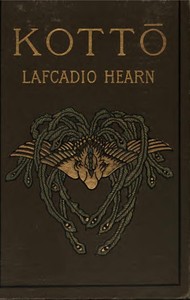
Kotto: Being Japanese Curios, with Sundry Cobwebs by Lafcadio Hearn
Let's be clear from the start: ‘Kotto’ is not a novel with a plot. Think of it more like a carefully curated cabinet of curiosities, which is exactly what the title suggests. Lafcadio Hearn, a Westerner who married into Japanese society and became a citizen, acts as your guide through a Japan that was rapidly modernizing at the turn of the 20th century. He felt a deep urgency to document the soul of the old world before it disappeared.
The Story
The book is a series of short, standalone pieces. One moment, Hearn is philosophizing about the artistry of a common kitchen bowl. The next, he’s relaying a local ghost story about a mirror that holds a trapped spirit. He describes bizarre insects, muses on Buddhist parables, and recounts legends of foxes and badgers with supernatural powers. There’s no linear narrative. Instead, the ‘story’ is the cumulative portrait of a culture’s imagination—its superstitions, its aesthetics, and its quiet, everyday magic. It’s the literary equivalent of spending an afternoon with a brilliant, slightly eccentric collector who shows you his most prized and peculiar finds.
Why You Should Read It
I love this book because it feels personal. Hearn isn’t a detached academic; he’s a convert, writing with awe and a touch of melancholy. His prose is gorgeous and precise, pulling you into each tiny scene. Reading ‘Kotto’ taught me to look closer at the ordinary. A cracked vase isn’t just broken; for Hearn, its flaw tells a story of use, age, and a beauty that perfection could never achieve. The ghost stories aren’t just scary—they’re windows into what people feared, respected, and believed about the world around them. It’s a quiet, thoughtful book that slows you down and makes the world feel stranger and more wonderful.
Final Verdict
‘Kotto’ is perfect for the curious reader who enjoys literary nonfiction, folklore, or unique travel writing. If you loved the eerie atmosphere of ‘Ugetsu Monogatari’ or the thoughtful essays of someone like Robert Macfarlane, you’ll find a kindred spirit in Hearn. It’s also a great pick for writers seeking inspiration on observation and detail. Fair warning: it’s not a page-turning thriller. It’s a book to savor in small doses, letting each little ‘curiosity’ settle in your mind. For anyone wanting to visit the shadowy, poetic heart of old Japan, this is your essential, off-the-beaten-path guide.
This text is dedicated to the public domain. Preserving history for future generations.
Susan Smith
9 months agoBefore I started my latest project, I read this and the critical analysis of current industry standards is very timely. A refreshing and intellectually stimulating read.
Kimberly Lee
3 months agoThe information is current and very relevant to today's needs.
William Hernandez
2 years agoThis is now a staple reference in my professional collection.
David Moore
3 months agoI decided to give this a try based on a colleague's recommendation, the critical analysis of current industry standards is very timely. Well worth the time invested in reading it.





Linda Jones
5 months agoHaving read the author's previous works, the narrative arc keeps the reader engaged while delivering factual content. I'm glad I chose this over the other alternatives.